
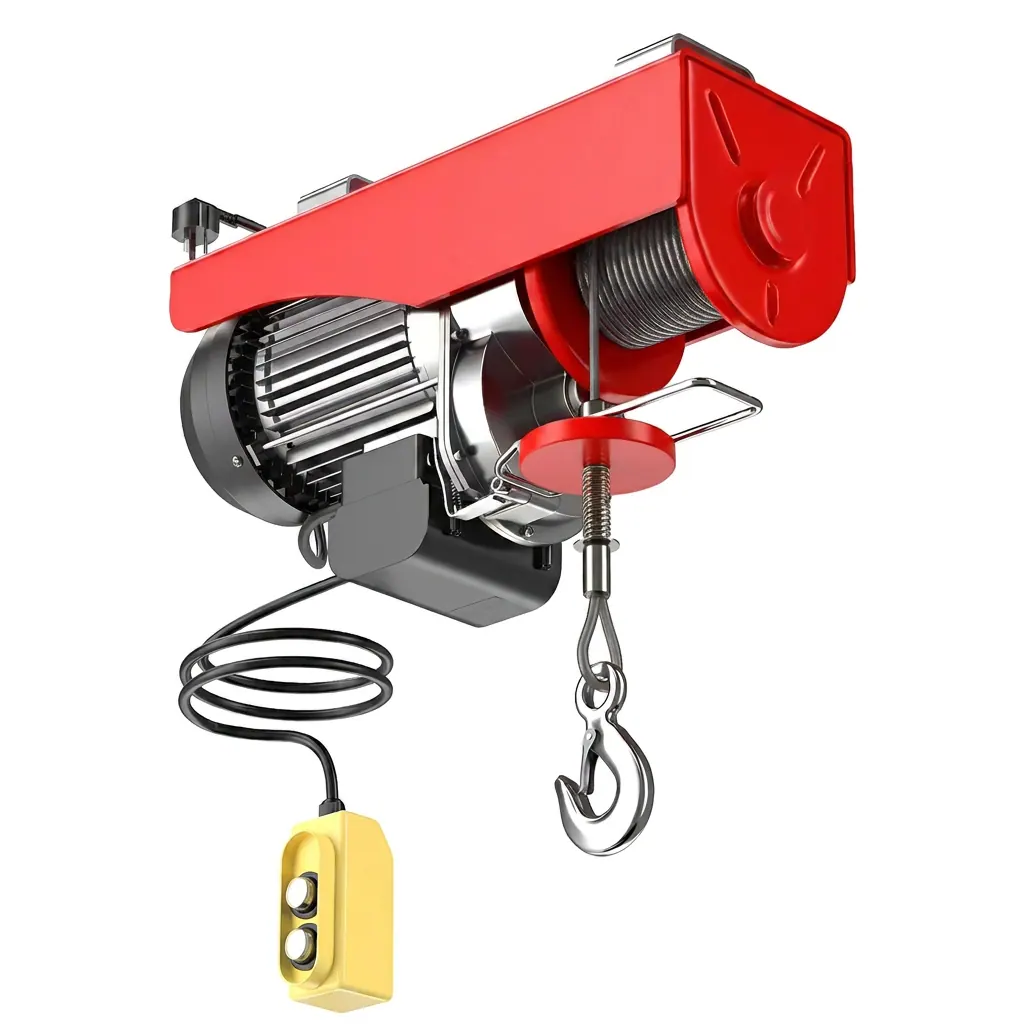
Electric hoists are powerful tools that make heavy lifting effortless — but when used improperly, they can cause serious injury or even death. According to OSHA, thousands of lifting-related accidents occur every year, most of which are preventable with proper safety procedures.
This complete guide covers everything you need to know about electric hoist safety, from pre-use inspections to emergency procedures.
1. Pre-Use Inspection Checklist
Before operating any electric hoist, perform these checks:
Daily Inspection (before each use): - Verify the load rating plate is legible and matches your intended load - Inspect the wire rope or chain for kinks, fraying, or excessive wear - Check hooks for deformation, cracks, or worn latch mechanisms - Test the upper and lower limit switches - Ensure the brake holds when load is suspended - Check power cord and control pendant for damage - Verify warning labels are present and readable
Periodic Inspection (monthly/quarterly): - Lubricate moving parts per manufacturer specifications - Inspect gearbox for oil leaks - Check motor brushes and electrical connections - Test overload protection device - Inspect mounting structure for cracks or loosening
Safety Tip: Never use a hoist that fails inspection. Tag it "Out of Service" and report it immediately.
2. Load Capacity Rules
The number one cause of hoist accidents is overloading. Follow these rules:
- Never exceed the rated load capacity. This includes the weight of slings, hooks, and attachments.
- Know your load. If you're unsure of the weight, calculate it or use a load cell.
- Apply a safety factor. For critical lifts, limit loads to 80% of rated capacity.
- Never side-load. Electric hoists are designed for vertical lifting only. Side loading can damage the hoist and cause the load to swing uncontrollably.
- Avoid shock loading. Lift smoothly, don't jerk the load. Shock loads can exceed rated capacity by 200% or more.
3. Operator Training Requirements
Only trained and authorized personnel should operate electric hoists:
- Formal training: Operators must complete manufacturer-approved training covering hoist operation, safety procedures, and emergency protocols.
- Hands-on practice: Trainees should operate under supervision until demonstrating competence.
- Refresher training: Conduct annual refresher courses and after any accident or near-miss.
- Age and fitness: Operators must be at least 18 years old and physically capable of operating the equipment safely.
- Certification: Keep records of all training and certifications.
4. Personal Protective Equipment (PPE)
Always wear appropriate PPE when operating or working near electric hoists:
- Hard hat: Protect against falling objects
- Safety glasses: Shield eyes from debris and swinging loads
- Steel-toe boots: Protect feet from falling loads
- Gloves: Improve grip and protect hands (use appropriate gloves for the load type)
- High-visibility clothing: Ensure you're seen by other workers
- Hearing protection: Required in high-noise areas
5. Safe Operating Procedures
Follow these steps for every lift:
- Plan the lift: Determine the load weight, lifting path, and destination. Clear the area of obstacles and personnel.
- Position the hoist: Ensure the hoist is directly above the load. Never lift at an angle.
- Attach the load properly: Use appropriate slings and rigging. Ensure the load is balanced and secure.
- Test the lift: Raise the load a few inches, then pause to check balance and brake function.
- Lift smoothly: Use steady, controlled speed. Avoid sudden starts and stops.
- Keep the load low: Travel with the load as close to the ground as safely possible.
- Never leave a suspended load unattended.
- Lower carefully: Set the load down gently, then remove slings.
6. Common Accidents and How to Prevent Them
| Accident Type | Cause | Prevention |
|---|---|---|
| Load dropping | Overloading, worn rope/chain, brake failure | Regular inspection, never overload, test brakes |
| Hook failure | Deformed hooks, missing safety latches | Inspect hooks daily, replace damaged hooks |
| Electrical shock | Damaged cords, improper grounding | Inspect cords, use GFCI, proper grounding |
| Crushing injury | Load swinging, working under load | Keep clear of load path, never work under suspended load |
| Tripping/falling | Cluttered work area, poor housekeeping | Keep area clean, mark load paths |
7. Emergency Procedures
Know what to do when something goes wrong:
- Load starts swinging: Stop all movement. Wait for the load to stabilize before proceeding. Do not try to grab or stop a swinging load.
- Brake failure: Lower the load immediately using the control. If the brake completely fails, warn everyone in the area and evacuate.
- Power outage: The load will remain suspended (brakes are fail-safe). Do not attempt to manually lower the load. Restore power or call a technician.
- Personnel injury: Stop operations immediately. Administer first aid and call emergency services. Report the incident.
- Fire: Cut power to the hoist. Use a Class C fire extinguisher for electrical fires. Evacuate if necessary.
8. Maintenance and Record Keeping
Proper maintenance is essential for safety:
- Follow the manufacturer's maintenance schedule for lubrication, inspections, and part replacements.
- Keep detailed maintenance records including dates, work performed, parts replaced, and technician name.
- Replace worn parts immediately. Don't wait for failure.
- Use only OEM or approved replacement parts.
- Calibrate overload protection devices annually or after any overload event.
9. Environmental Considerations
Electric hoists are affected by their operating environment:
- Temperature: Most hoists operate between -10°C and +40°C. Extreme temperatures require special models.
- Humidity: High humidity can cause corrosion. Use corrosion-resistant models in humid environments.
- Dust and debris: Cover the hoist when not in use. Clean regularly to prevent buildup.
- Chemical exposure: Avoid using standard hoists near corrosive chemicals. Use chemically-resistant models.
- Outdoor use: Most electric hoists are indoor-rated. For outdoor use, ensure the hoist has appropriate IP rating and weather protection.
10. Regulatory Compliance
Depending on your location, these regulations may apply:
- OSHA (USA): 29 CFR 1910.179 (Overhead and Gantry Cranes), 29 CFR 1910.184 (Slings)
- EU Machinery Directive: 2006/42/EC, with harmonized standards EN 14492-1 (electric hoists)
- ISO standards: ISO 10302 (safety code for cranes and hoists)
- Local regulations: Check your country's specific workplace safety laws
HENGYAN Recommendation: When sourcing electric hoists, always verify CE certification and request the manufacturer's Declaration of Conformity. Our PA-series mini electric hoists and KCD aluminum shell hoists are designed with multiple safety features including overload protection, emergency stop, and limit switches.
Final Safety Checklist
Before every shift, confirm:
- [ ] Operator is trained and authorized
- [ ] Pre-use inspection completed and passed
- [ ] Load weight is known and within capacity
- [ ] Work area is clear of personnel and obstacles
- [ ] PPE is worn by all personnel in the area
- [ ] Emergency procedures are understood
- [ ] Hoist is properly maintained and certified
Safety is not optional — it's the foundation of every successful lifting operation. Invest in training, maintenance, and quality equipment to protect your workers and your business.
Need safe, reliable electric hoists for your operation? Contact HENGYAN factory for a quote on CE-certified lifting equipment with comprehensive safety features.
Need expert guidance?
Send your application details to HENGYAN factory. Our team will recommend the right lifting equipment configuration and provide a factory-direct quote within 12 hours.
Request a Free Quote