
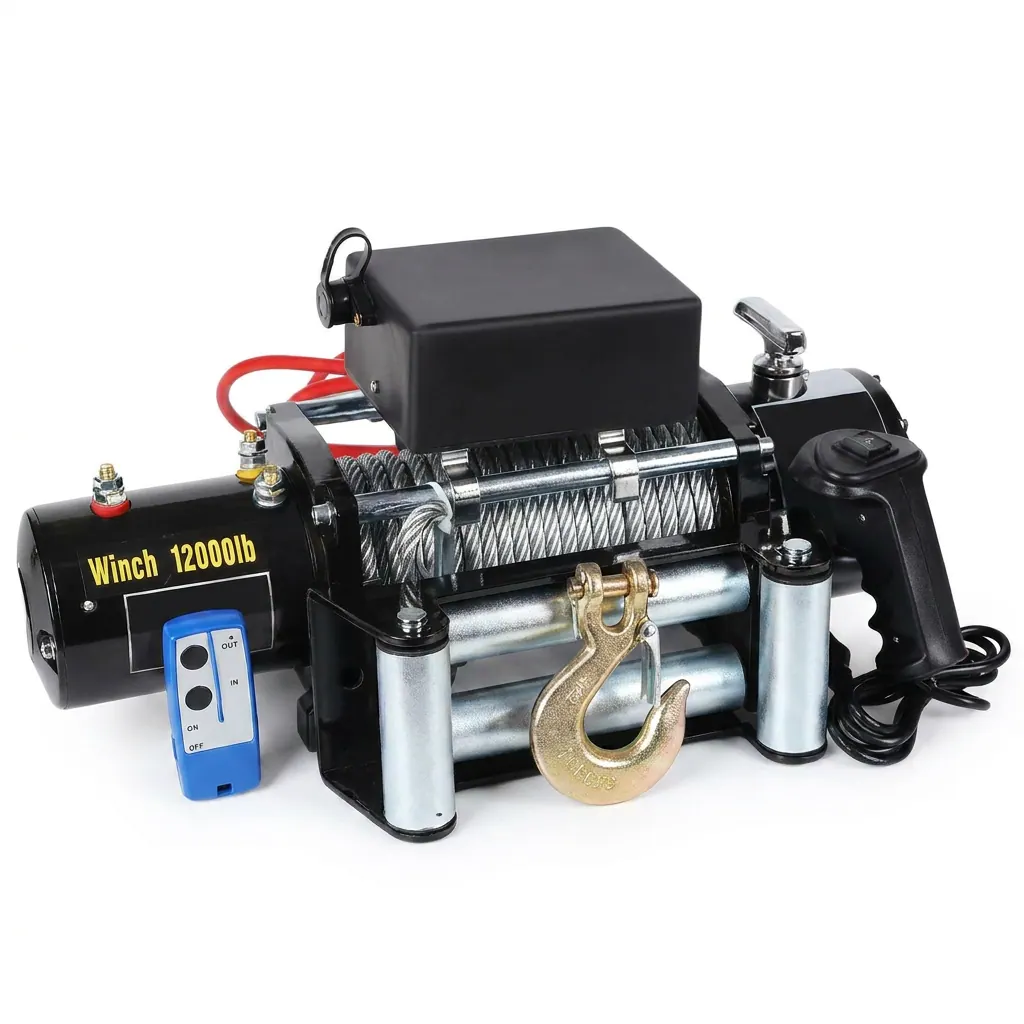
A well-maintained electric winch can last 10+ years. A neglected one can fail in months — often at the worst possible moment, with a load suspended or a vehicle stuck.
This step-by-step guide covers everything you need to know about electric winch maintenance, from daily checks to annual overhauls.
Why Winch Maintenance Matters
Electric winches operate under extreme stress. A typical 5000 lb winch generates enough force to pull a vehicle out of mud, lift heavy equipment, or move construction materials. Every use puts strain on:
- The electric motor (heat buildup)
- The gear train (metal-on-metal friction)
- The wire rope (fatigue and corrosion)
- The brake system (wear and contamination)
- The electrical system (corrosion and loose connections)
Regular maintenance catches problems early, prevents catastrophic failure, and extends the life of your investment.
Maintenance Schedule Overview
| Frequency | Tasks | Time Required |
|---|---|---|
| Before each use | Visual inspection, functional test | 5 minutes |
| Monthly | Detailed inspection, cleaning, light lubrication | 30 minutes |
| Every 3 months | Gearbox oil check, brake inspection, electrical check | 1 hour |
| Annually | Full overhaul, gearbox oil change, load test | 2-3 hours |
| After heavy use / water submersion | Immediate inspection and service | 1-2 hours |
Step 1: Pre-Use Inspection (Every Time)
Before operating your winch, perform these 5 checks:
1.1 Wire Rope Inspection
- Check for fraying, broken wires, kinks, or birdcaging
- Ensure rope is properly spooled on the drum (no overlaps or gaps)
- Verify rope end is securely attached to the drum
- Replace rope if you see more than 6 broken wires in one lay, or any kink
1.2 Hook and Fairlead Check
- Inspect hook for cracks, bending, or wear (replace if throat opening increases by 15%)
- Verify safety latch works properly and returns to closed position
- Check fairlead (rope guide) for sharp edges or excessive wear
- Ensure hook swivel rotates freely
1.3 Mounting and Structure
- Check mounting bolts for tightness (torque to manufacturer specs)
- Inspect mounting plate or bumper for cracks or deformation
- Verify winch is securely attached with no movement
1.4 Electrical Connections
- Check battery terminals for corrosion or looseness
- Inspect power cables for cuts, fraying, or heat damage
- Verify solenoid connections are secure
- Check remote control cord for damage
1.5 Functional Test
- With no load, spool out 1 meter of rope
- Test in both directions (in and out)
- Verify brake holds when you release the button
- Check for unusual noises or vibrations
- Test free spool clutch (if equipped)
Step 2: Monthly Maintenance (30 Minutes)
2.1 Clean the Winch
- Remove dirt, mud, and debris from the winch body
- Clean the wire rope with a rag and mild solvent
- Wipe down the control box and remote
- Clean the fairlead and hook
2.2 Lubricate the Wire Rope
This is the single most important maintenance task for extending rope life:
- Clean the rope thoroughly
- Apply a dedicated wire rope lubricant (not regular grease — it's too thick)
- Apply while spooling the rope in, ensuring even coverage
- Wipe off excess lubricant (it attracts dirt)
Pro Tip: Use a penetrating wire rope lubricant that can reach the inner strands. Surface-only lubrication doesn't protect the core.
2.3 Inspect and Lubricate the Hook
- Clean the hook and swivel
- Apply light oil to the swivel bearing
- Check hook latch spring tension
- Lubricate the latch pivot point
2.4 Check Electrical System
- Tighten all electrical connections
- Apply dielectric grease to battery terminals (prevents corrosion)
- Check solenoid operation by listening for clean "click" when activating
- Inspect wiring harness for chafing or damage
Step 3: Quarterly Maintenance (Every 3 Months)
3.1 Gearbox Oil Check
Most electric winches have a sealed gearbox, but some allow oil level checks:
- Locate the gearbox oil fill plug (usually on the side)
- Remove plug and check oil level (should be at bottom of fill hole)
- If low, add the manufacturer-recommended gear oil (typically 80W-90 GL-5)
- Check for oil leaks around seals
- If oil looks milky (water contamination), change immediately
3.2 Brake System Inspection
The brake is the most critical safety component:
- Remove the brake cover (if accessible)
- Inspect brake pads/shoes for wear (replace if less than 1mm thick)
- Check for oil or grease contamination on brake surfaces (clean with brake cleaner)
- Verify brake springs are intact and properly tensioned
- Test brake holding power with a known load
3.3 Motor Inspection
- Check motor housing for cracks or damage
- Verify motor mounting bolts are tight
- Check for excessive heat after use (warm is normal, too hot to touch indicates a problem)
- Inspect motor brushes if accessible (replace if less than 6mm long)
- Clean motor vents to ensure proper cooling
3.4 Solenoid and Control Box
- Open control box and inspect for corrosion
- Check all wire connections inside
- Verify solenoid contacts are clean (not pitted or burnt)
- Check remote control button operation
- Test emergency stop function
Step 4: Annual Overhaul (2-3 Hours)
4.1 Complete Disassembly and Inspection
- Remove winch from mounting
- Disassemble gearbox, brake, and drum assembly
- Inspect all gears for wear, chipping, or pitting
- Check bearings for play or roughness
- Inspect drum for wear or grooving
- Check all shafts for bending or wear
4.2 Replace Wear Parts
Annual replacement of these parts prevents unexpected failure: - Wire rope (if showing significant wear) - Brake pads/shoes - Gearbox oil and seals - Motor brushes (if applicable) - Hook safety latch - Any worn bearings
4.3 Reassembly and Testing
- Reassemble with new gaskets and seals
- Fill gearbox with fresh oil to correct level
- Mount winch and torque bolts to spec
- Perform no-load test in both directions
- Conduct load test at 50% and 100% of rated capacity
- Verify brake holds at full rated load
- Check for leaks after testing
Step 5: After Heavy Use or Water Submersion
If your winch gets submerged in water or used in extreme conditions:
- Immediately rinse with fresh water to remove mud, salt, or chemicals
- Disassemble and inspect for water intrusion
- Change gearbox oil (water will contaminate it)
- Dry all electrical components thoroughly
- Apply corrosion inhibitor to metal surfaces
- Re-lubricate everything
- Test before next use
Critical: Never use a winch that has been submerged until it has been fully inspected and serviced. Water in the gearbox or motor can cause catastrophic failure.
Common Problems and Troubleshooting
| Problem | Possible Cause | Solution |
|---|---|---|
| Winch won't run | Dead battery, loose connection, bad solenoid | Check battery, tighten connections, test solenoid |
| Slow operation | Low battery voltage, worn motor, dragging brake | Charge battery, inspect motor, adjust brake |
| Brake doesn't hold | Worn pads, oil contamination, weak spring | Replace pads, clean surfaces, replace spring |
| Rope birdnests | Improper spooling, damaged fairlead | Re-spool properly, replace fairlead |
| Motor overheats | Excessive duty cycle, blocked vents, worn brushes | Allow cooling time, clean vents, replace brushes |
| Grinding noise | Worn gears, low gear oil, damaged bearing | Inspect gears, add oil, replace bearing |
| Free spool won't engage | Clutch damage, misalignment, dirt buildup | Clean clutch, inspect for damage, adjust |
Maintenance Tools and Supplies Checklist
Keep these on hand for winch maintenance:
- Wire rope lubricant (penetrating type)
- Gear oil (80W-90 GL-5 or manufacturer spec)
- Brake cleaner
- Dielectric grease
- Multi-purpose grease
- Wire brush
- Rags and gloves
- Torque wrench
- Multimeter (for electrical testing)
- Replacement parts kit (brake pads, seals, brushes)
When to Replace Your Winch
Even with perfect maintenance, winches don't last forever. Consider replacement when:
- Gear teeth are significantly worn or chipped
- Motor has lost significant power (can't reach rated capacity)
- Frame or drum is cracked or deformed
- Repair costs exceed 50% of a new winch
- Manufacturer no longer supports replacement parts
- Safety cannot be guaranteed
HENGYAN Recommendation: Our electric recovery winches and KCD clutch winches are designed for easy maintenance with accessible gearboxes, replaceable brake pads, and durable construction. All models come with detailed maintenance manuals and readily available spare parts.
Final Maintenance Reminders
- Never skip pre-use inspections — they take 5 minutes and can save lives
- Lubricate the wire rope monthly — this doubles rope lifespan
- Change gearbox oil annually — even if the winch is rarely used
- Keep maintenance records — track dates, parts replaced, and any issues
- Use only approved replacement parts — aftermarket parts may not meet safety standards
- When in doubt, have it professionally serviced — especially after heavy use or accidents
A well-maintained winch is a reliable winch. Invest the time in regular maintenance, and your winch will be ready when you need it most.
Need a durable, easy-to-maintain electric winch? Browse HENGYAN's winch collection or contact our factory for expert advice on selecting the right winch for your application.
Need expert guidance?
Send your application details to HENGYAN factory. Our team will recommend the right lifting equipment configuration and provide a factory-direct quote within 12 hours.
Request a Free Quote